
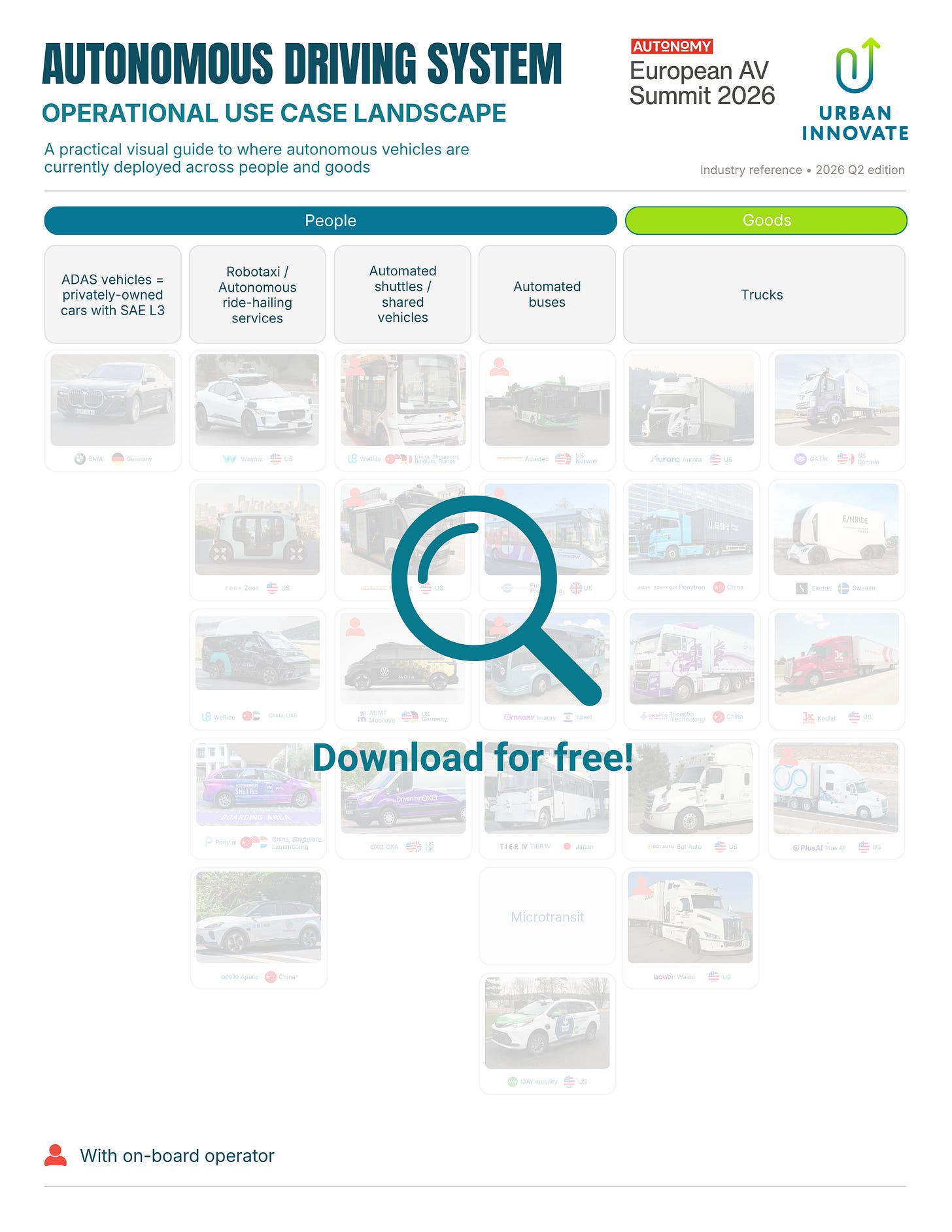
For this second edition of the Operational Use-Case Landscape for Autonomous Driving Systems (ADS), I continued expanding the review of deployments that are moving beyond pilots and toward real-world operations.
This update includes:
- An expanded review of Level 4 truck and freight operators, including several new stakeholders. For now, I have chosen to focus on operations taking place on public roads and therefore excluded adjacent sectors such as delivery robots, logistics centers, ports, and mining operations.
- TIER IV‘s purpose-built autonomous minibus, which operates in Japan.
- A new entrant to the shared mobility landscape: Imagry, which relies entirely on a localized, vision-centric sensor suite.
- Additional WeRide and pony.ai deployments identified across several countries, illustrating the company’s broader international footprint.
As always, the objective is to track the operational deployments that offer the most valuable insights into how ADS technologies are being implemented in practice.
A reminder on how the use cases are selected for this list
The quarterly overview focuses on deployments that go beyond demonstrations and technology showcases and are intended for real operational use. Not all of them are fully commercial yet, sometimes because regulatory frameworks are still evolving, but they are designed with deployment and scalability in mind rather than research alone.
I also chose not to exclude operations that still rely on safety drivers. In many cases, the presence of a safety operator reflects regulatory requirements or the understandable desire of transit agencies and fleet operators to gradually build confidence and operational experience with the technology.
One consequence of this approach is that I generally do not include retrofitted vehicles in the list. The objective is to focus on systems that are either already deployed or close to deployment as products and services. That said, my recent deep dive into Japan’s ecosystem reminded me once again how valuable retrofitted vehicles can be for learning, experimentation, and understanding real-world operational challenges.
The information presented here comes from a combination of client discussions, industry contacts, conferences, public announcements, and admittedly a LinkedIn feed full of autonomous driving news. But this overview is not meant to be static. I welcome inputs from readers, whether they are corrections, additions, objections, or simply questions. The ADS landscape evolves rapidly, and my goal is for this document to evolve alongside it.
At Urban Innovate, we are connected with many of the leading operators, technology providers, and public stakeholders across both continents.
If your organization is exploring autonomous mobility, don’t hesitate to reach out - we would be happy to share perspectives and help you build the right ecosystem around your project.
Why freight is emerging as the leading L4 use case
If you read me regularly or have met me in person, you know how much I love people. And by this, I mostly mean that I am fascinated by civilizations, culture, cities, and the ways people interact, live together, and organize mobility systems — ideally with the smallest impact possible on the planet.
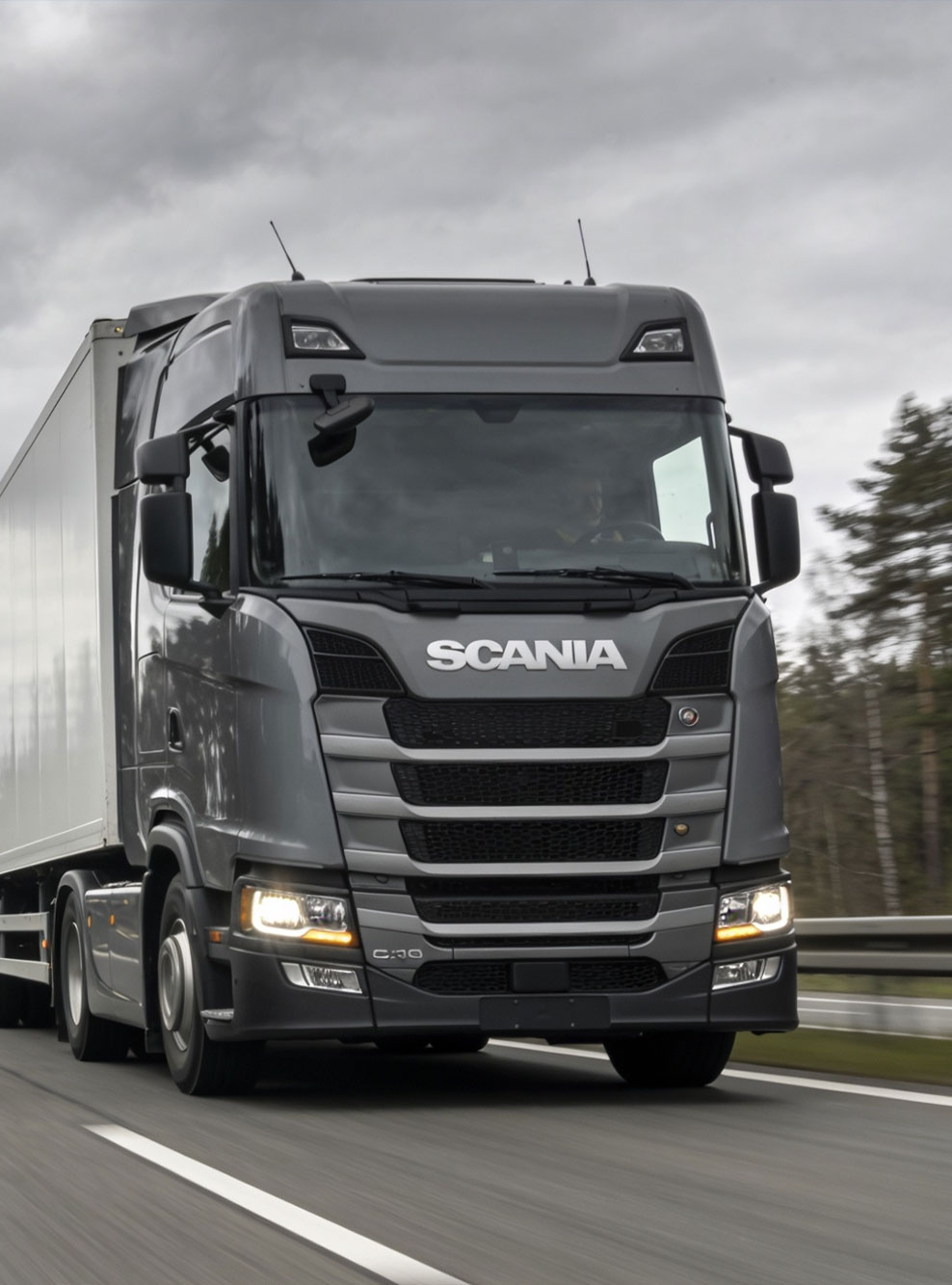
So, when discussing the future of Level 4 autonomy with peers, I sometimes feel slightly disappointed hearing repeatedly that the largest impacts will first happen in trucks and freight. Freight automation will probably not transform the livability of cities in the same way public transportation could. But inevitably, it is where the business model may have the strongest short-term economic impact – especially in the United States where trucks move roughly 72% of all freight by weight according to the American Trucking Associations.
Looking at the current operational landscape, most autonomous trucking players naturally concentrate in countries where long-distance road freight dominates logistics patterns — especially the United States, but also China and Australia.
This quarter, I added several new players to the operational review:
- Kodiak, founded in 2018 and now publicly traded, continues expanding commercial autonomous trucking operations in Texas. The company has already completed fully driverless freight deliveries and focuses heavily on long-haul highway automation.
- Bot Auto, founded in 2023 by former TuSimple co-founder Dr. Xiaodi Hou, is still a relatively new entrant but already demonstrates strong technical maturity and operational ambitions.
- PlusAI, headquartered in Santa Clara, California, continues commercial deployments with safety drivers onboard while scaling partnerships with major truck manufacturers.
- Waabi, headquartered in Toronto, Canada, although much of its operational activity takes place in the United States, it remains in the “commercial with safety driver” category.
Torc Robotics, owned by Daimler Truck and headquartered in Virginia, remains focused primarily on testing rather than commercial operations for now. The company targets a commercial launch in 2027 and therefore remains outside the operational deployment list at this stage.
A closer look at Japan’s ADS landscape
One thing struck me while investigating Japan’s autonomous driving deployments in more detail: it is difficult to find consolidated information online about what is actually happening on the ground. Governmental portals list dozens of pilots, municipalities, and funding programs, but many projects themselves have little or no dedicated public presence. I suppose the best way to understand what is truly happening may simply be to go there physically — which is exactly what I am planning to do this fall.
Japan reported more than 100 autonomous driving pilots in 2025, backed by significant public funding according to a 2025 report from the Ministry of Land, Infrastructure, Transport and Tourism for the Japan Automobile Standards Internationalization Center. The focus of most projects is to complement or expand mobility services, particularly in rural and ageing communities facing severe driver shortages.
While researching the market, I found many retrofitted minibuses and experimental full-size buses operating across the country. But only one company clearly stood out for combining purpose-built vehicles with real deployment ambitions: TIER IV.
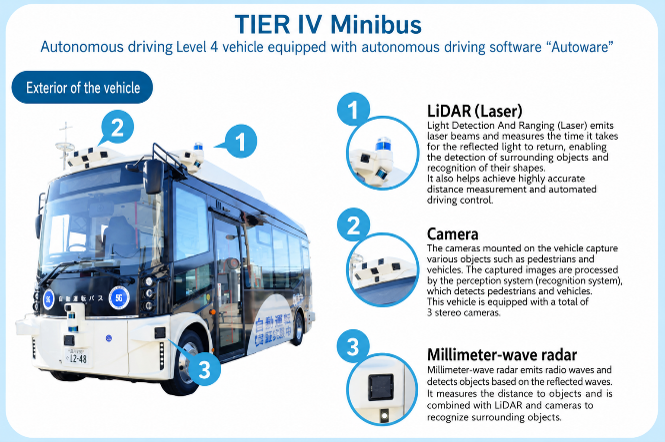
TIER IV is pursuing two complementary approaches to Level 4 autonomous transit in Japan. On one side, the company developed the fanfare Minibus 2.0, a purpose-built electric shuttle designed for localized community routes, corporate campuses, and municipal services. The vehicle integrates redundant systems, LiDARs, cameras, radars, and the open-source Autoware autonomous driving software into a turnkey white-label platform.
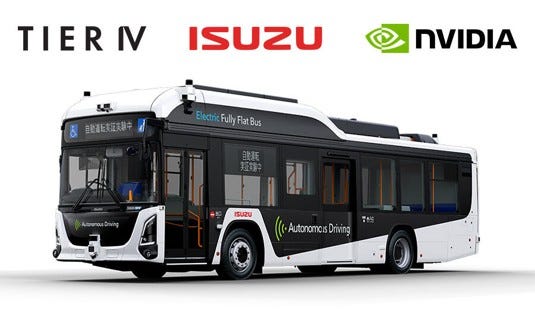
On the other side, TIER IV is scaling toward larger urban transit operations through a partnership with Isuzu and NVIDIA, embedding Level 4 capabilities directly into Isuzu’s ERGA transit buses using NVIDIA’s DRIVE AGX Thor compute platform.
Together, these two approaches illustrate something broader happening in Japan: the country is not only experimenting with autonomous vehicles, but actively preparing both localized mobility and high-capacity transit systems for future driverless operations.
My impression is that Japan is taking a somewhat different path from many Western countries. The focus is not necessarily on creating new ADS platforms, but rather on deploying extensively in real-world conditions: open roads, real passengers, long operational periods, public feedback loops, and intensive infrastructure experimentation.
This approach appears closely linked to the challenges the country is trying to address. Themes such as ageing populations, accessibility, and driver shortages appear repeatedly throughout governmental documents and project descriptions, suggesting that autonomous mobility is being viewed as a practical response to societal needs rather than simply a technological opportunity.
Another characteristic that stands out is Japan’s strong interest in connected infrastructure and V2I systems. Over the years, I have generally leaned toward what I would call “frugal infrastructure” for cities: systems where vehicles remain largely autonomous without requiring massive roadside retrofitting and long-term maintenance burdens for municipalities. Japan, however, continues to explore connectivity deeply, and it will be fascinating to see whether this approach proves scalable over time.
Other cool things happening in the ADS world
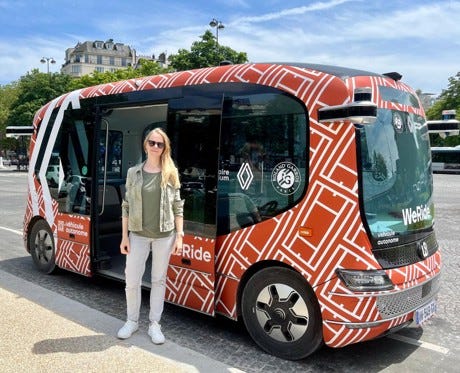
As I continued refining the database, it appears that WeRide is operating in more places than initially documented. The updated map now captures a wider range of the company’s international deployments. One example is France, where WeRide returned to Roland-Garros in partnership with Renault. I had the opportunity to try the service last year and was impressed by how naturally it blended into the visitor experience. Big shout out to beti who operated the service locally.
Not surprisingly, Singapore continues to position itself as one of the most active ecosystems for autonomous mobility deployment:
- On the robotaxi side, the collaboration between Grab and WeRide remains one to watch, while Pony.ai and ComfortDelGro have also launched deployments in the city-state.
- On the public transportation side, Singapore’s Land Transport Authority (LTA) awarded last October an S$8.1 million contract to an industry consortium including Zhidao Network Technology and BYD to pilot SAE Level 4 autonomous buses. Operations are expected to begin in the second half of 2026.
Beyond the operators already included in the overview, I continue to follow several companies closely. Glydways and 2getthere remain particularly interesting because of their dedicated-guideway approaches, while PIX Moving has caught my attention recently with its distinctive vehicle design, which were showcased in Europe during the Automated Mobility Summit in Zurich.
Finally, I am keeping an eye on developments in Munich, where MAN Truck & Bus and ADASTEC are testing autonomous bus operations within the MINGA project together with MVG. This one has a special meaning for me given my years in Germany and the region. I have a feeling there will be more to report from this project in the next edition.
Acknowledgement, limitations, and how to read this document
As of June 2026, this overview synthesizes public data, expert insights, and firsthand experience across the U.S., Europe, and Asia. While I have aimed for technical accuracy, some subjectivity is inevitable when assessing “real-world” autonomy and human intervention levels. I appreciate comments and feedback for future updates.